Polydioxanone, or PDO, threads have earned a place in modern medical aesthetics for patients who want lift and definition without committing to surgery. When used well, a PDO thread lift can soften early jowls, sharpen a jawline, support a waning cheek, or tidy a mild double chin. It is not a facelift and never will be, but it can delay one. If you are considering PDO threads for face contouring or skin tightening, a clear picture of the procedure steps, expected results, and the trade-offs leads to calmer decisions and better outcomes.
I have treated patients who left after lunch looking fresher, then went back to work the next day. I have also managed a few who bruised for longer than expected, or who needed a small adjustment. Both stories are normal. The difference lies in careful selection, precise technique, and level-headed aftercare.
What PDO threads are and how they work
PDO is a biodegradable suture material used safely in surgery for decades. In aesthetic practice, threads are preloaded into thin needles or cannulas, then placed under the skin to achieve two complementary goals. First, structural threads with barbs or cogs hook into the tissue and give an immediate, mechanical lift. Second, smooth or twisted threads act more like scaffolding, triggering collagen production along their path. The body breaks PDO down over 6 to 9 months, sometimes up to 12, while the collagen scaffold can persist longer. Many patients enjoy PDO threads results for 9 to 18 months depending on age, skin quality, metabolism, and lifestyle.
There are families of PDO threads. Barbed threads grip and elevate, commonly used along the jawline, cheeks, and sometimes for a brow lift. Smooth threads focus on skin texture and fine lines, placed in a mesh for skin rejuvenation. Twisted or screw threads add subtle volume support, useful for a soft lip line or nasolabial area. Picking the right type is not marketing, it is geometry and biology meeting your goal.
Who tends to benefit
The sweet spot is mild to moderate facial sagging with reasonable skin thickness and elasticity. Think early jowls, softening of the jawline, gentle descent of the cheeks, faint marionette lines, or a slightly tired neck contour. PDO threads for wrinkles can help etched cheek lines when paired with smooth threads, while PDO threads for jawline rely on barbs for lift. Patients seeking a PDO thread facelift as a non surgical treatment should recognize it as an in-between measure, not a substitute for a surgical SMAS lift.
Age matters less than tissue condition. I have treated patients in their late 30s with great elasticity who wanted definition, and patients in their late 50s with disciplined skincare and low sun damage who still had enough spring in the skin for a useful lift. On the other hand, very thin, crepey skin with poor support tends to dimple or show thread irregularity. Heavy tissue with significant fat descent can overpower the lift, creating brief improvement that relaxes too soon. In those cases, I often recommend sequencing treatments, such as skin tightening energy devices, weight stabilization, volume balancing with hyaluronic acid or biostimulatory fillers, and then PDO thread lifting treatment for a more durable result.
Setting expectations you can live with
PDO threads cosmetic treatment is designed for a natural lift, not a dramatic face swap. Expect millimeters, not centimeters. The best compliments after PDO threads for facial how pdo threads work lifting sound like, “You look rested,” or, “Did you change your hair?” With realistic aims, PDO threads benefits include a crisper mandibular angle, a softer jowl, a cheek that reflects light again, and a neck profile that reads cleaner in photos.
Durability is a frequent question. A typical arc for a PDO threads non surgical facelift looks like an immediate lift from the barbs, mild settling for one to two weeks, then collagen stimulation gaining ground by the fourth to eighth week. Peak effect often lands around three months. Lifestyle and anatomy shape the tail. Side sleepers crush collagen on the favored side, smokers create weaker collagen, heavy exercisers metabolize PDO quicker, and significant weight change will reshape your results. None of these are reasons to avoid PDO threads facial rejuvenation treatment, but they matter.
The consultation that protects your outcome
A proper PDO thread consultation is half medicine, half mapping. Your clinician should take a medical history, including any bleeding disorders, autoimmune disease, active skin infection, herpes simplex flares, or plans for dental work. Blood-thinning medications or supplements can be paused only with physician guidance. Discuss prior fillers, threads, and energy treatments, as existing materials affect where and how threads can be placed.
Then comes the functional exam. We look at how you animate, your chewing muscle bulk, fat pads, ligament strength, and skin redundancy. For example, strong masseters and a full lower face often benefit from slimming or contouring before heavy lifting threads. Pronounced nasolabial folds frequently improve more by lifting the midface support and adjusting lateral vectors than by stuffing the fold itself. If the under eye area is your concern, PDO threads for under eye area can improve crepey skin with smooth threads, but volume loss at the tear trough is usually better addressed with filler or PRF, not barbed threads.
Good clinics capture PDO threads before and after photos under consistent lighting and angles. These are not vanity shots. They document asymmetry to guide placement and create a baseline so subtle enhancements are measurable later.
The appointment day: what really happens
On procedure day, wear comfortable clothing and arrive makeup free. If you are anxious, light oral anxiolytics can be prescribed in advance, but you will need a driver. If you bruise easily, arnica or bromelain pre-treatment is sometimes used, though data are mixed.
Skin is cleansed thoroughly with antiseptic. Marking is meticulous. The practitioner maps vector lines that respect your ligaments and danger zones, then identifies entry points. For PDO threads for cheeks or a jawline, entry points commonly sit near the sideburn or preauricular area where skin glides. For a neck or under chin lift, small access ports under the jaw or behind the ear keep the vectors discreet. I often have patients sit up mid-marking to see how gravity changes the plan. Tiny adjustments at this stage prevent post-procedure tethering or uneven lift.
Local anesthesia is almost always used. A field block with lidocaine and epinephrine controls discomfort and reduces bleeding. Numbness is your friend here. It allows calm, precise cannula work and fewer passes.
Cannulas versus needles is a technical choice. Most barbed threads are delivered through blunt cannulas that part tissue without cutting vessels. Smooth threads can come via fine needles for superficial placement. Placement depth varies by goal. Lifting threads follow a plane just above the SMAS in the face, while skin-improving smooth threads sit more superficially.
The feeling is odd rather than painful. Patients describe pressure, a gentle push under the skin, and a brief tug as barbs anchor. When the thread is seated, the external tail is trimmed flush with the skin. A sterile strip or tiny bandage covers the entry point. The instant lift you see on the table is often 80 to 90 percent of what you will keep after minor settling.
Most sessions last 30 to 90 minutes, depending on how many areas are treated. PDO threads for brow lift or for the under eye area add time because the tissue is delicate and angles are tight.
A practical, stepwise view of the procedure
- Assessment and mapping: medical history, photos, and vector planning tailored to your anatomy and goals. Anesthesia and prep: antiseptic cleanse, local numbing, and sterile draping for a controlled field. Thread placement: cannula or needle insertion along planned vectors, seating and adjusting the lift as needed. Securing and trimming: setting the tension, trimming thread tails, and checking symmetry while seated. Post-care briefing: icing, activity limits, medication guidance, and your follow-up plan.
Aftercare that keeps you out of trouble
You will leave with a firmer contour and a to-do list. For 48 hours, minimize expressions that strain the treated area, such as wide yawning or heavy chewing. Sleep on your back with your head elevated for a week if possible to protect the vectors, especially after PDO threads for facial contouring or a jawline lift. Avoid saunas, hot yoga, and intense workouts for 5 to 7 days. Ice in short intervals helps tame swelling. Makeup can usually return after 24 hours if entry points have sealed.
Mild soreness, tightness, and a pulling sensation are normal for a week or two. Little ridges or puckers along the vector line often flatten on their own within days as the tissue relaxes around the threads. Bruising can range from none to multicolored, usually fading in 5 to 10 days. If you notice a blanching white patch with pain, rapidly expanding bruise, or asymmetric swelling that worsens after day three, contact your clinician. Vascular compromise is rare with cannulas, but prompt evaluation matters.
I prefer a quick check-in by phone on day two and a clinic review around week three, when early collagen stimulation begins and small adjustments can still be made. Gentle lymphatic massage is sometimes recommended in non-lifted zones for swelling, but never over freshly lifted vectors unless your practitioner instructs you.
Results through the calendar
Patients often divide PDO threads recovery time into phases. First, immediate lift with tightness and some swelling. Second, a quieter middle period with improving symmetry as tissue adapts. Third, the collagen phase, where skin texture and firmness improve. If smooth threads were used for fine lines, the skin may look fresher by weeks four to eight, while barbed threads show their best lift stability around the three-month mark.
At six months, expect to maintain most of the change if your baseline was a good fit. Around nine to twelve months, some relaxation appears, which is a reasonable time to discuss maintenance. Some patients prefer a lighter refresh annually, others extend to eighteen months based on response. Stacking PDO thread therapy with skincare, sun protection, and sometimes light energy treatments extends value.
What it costs and why
PDO threads treatment cost varies widely. Geography, brand of threads, number of threads, and provider experience drive the range. In the United States, a focused area like the brow or under chin might fall between 800 and 1,500 dollars. A more comprehensive lower face and jawline plan can land between 1,800 and 3,500 dollars, sometimes higher in major cities. Smooth thread mesh for a crepey cheek or neck can be additive, typically a few hundred to a thousand dollars depending on density.
Be wary of rock-bottom prices. Threads are medical devices with real cost, and proper technique takes time. Bargain bundles often cut corners on planning or number of threads, leading to underwhelming PDO threads results or the need for a second session that erases savings.
Side effects you should know about
Serious complications are uncommon in experienced hands, but they are not zero. Expected PDO thread side effects include swelling, bruising, mild asymmetry during settling, and transient puckering at entry or along the vector. Temporary numbness can happen, usually resolving over weeks.
Less common issues include thread visibility in thin skin, prolonged dimpling if a thread sits too superficially, or a palpable knot where the tail was not fully trimmed. A migrating tail can occasionally poke near the surface, which is usually fixed with a brief in-office trim. Infection is rare, but any spreading redness, heat, or pus warrants immediate review. Vascular injury is very rare with blunt cannulas, more a concern with deep fillers than with PDO threads, but anatomy maps and cautious technique still matter. If you are prone to cold sores and receiving threads near the mouth, antiviral prophylaxis can reduce risk of a flare.
How threads fit with other treatments
PDO thread aesthetic treatment works best as part of a plan, not a solo act. Here are common pairings that make sense when timed well:
- Volume before lift if needed: support deflated midface or temples with conservative filler, then lift to refine. Overfilled faces do not lift attractively, so balance is key. Skin quality always: medical-grade skincare, retinoids as tolerated, and strict sun defense make collagen stick around longer. Energy devices with respect for timing: radiofrequency or ultrasound for skin tightening can be performed a few weeks before or a few months after threads. Avoid running energy directly along fresh vectors too soon. Neuromodulators as helpers: softening strong depressor muscles, such as DAO or platysmal bands, can preserve a jawline lift by reducing downward pull.
Spacing and sequence are personal. A well-thought PDO thread therapy for face integrates these tools without crowding your calendar or overhandling tissue.
Area-specific notes you will not find in glossy ads
PDO threads for nasolabial folds are not about threading the fold. They are about lifting cheek support laterally so the fold looks softer. When threads are placed directly into the fold with barbs, puckering risk increases and the line may not improve in motion. For marionette lines, an upward and lateral vector paired with light filler near the labiomental crease often reads more natural than either alone.
PDO threads for double chin can help when the issue is skin laxity and mild anterior platysmal banding, not when submental fat is the driver. In cases with fat dominance, consider fat reduction first, then threads for skin firming. PDO threads for neck need feather-light hands and respect for skin thickness, using a mix of smooth and subtle barbed vectors. For brow lift, patient selection is crucial. A small lateral brow lift is achievable with one to two vectors per side, but heavy lids with significant dermatochalasis are surgical territory.
Under eye work is delicate. PDO threads for under eye area with smooth threads can improve crepe and fine lines when placed carefully in a superficial plane. If the tear trough is deep due to bone and fat changes, filler or fat grafting is more predictable. Cheek shaping thrives on angle. PDO threads for cheeks should respect the zygomatic arch, using upward and slightly posterior vectors to re-suspend rather than sweep tissue forward and medial, which can look puffy.
What a real patient day can feel like
One of my patients, a 44-year-old project manager, came in for mild jowls and a tired jawline. She exercises five days a week and has resilient skin. We placed two barbed PDO threads per side from a preauricular entry with vectors toward the jowl and marionette zone, plus a light web of smooth threads under the chin. She iced that evening, slept elevated, and avoided spin class for a week. Bruising was slight, limited to a faint yellow hue for five days. She texted a selfie on day ten with makeup on and a grin she could not contain. Three months later, she still had that shadow-free jaw angle in her profile shots. At twelve months, we refreshed with a lighter pass, one barbed thread per side, and the same tight routine carried her result another year.
Not every story is that smooth. Another patient with thin, sun-damaged skin had early dimpling along one vector that took a few weeks of gentle massage and a tiny release with a needle to settle. She loved the final look but had to sit with the process. The common thread is communication, realistic goals, and quick access to the clinic for small fixes.
Choosing the right practitioner
Credentials matter, but so does philosophy. Ask how often they perform PDO threads lifting therapy, which brands they use, and why. Request to see case photos of patients with similar anatomy and age, taken under the same lighting. A careful practitioner will talk you out of threads when the tissue is not a match or when a PDO thread cosmetic procedure would be a bandage over a different problem, like volume loss or heavy fat pads.
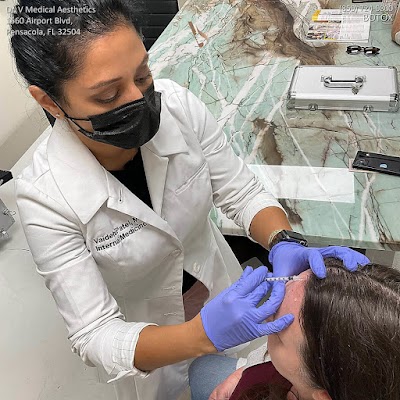
Notice the mapping. If vectors look copy-pasted from a template, proceed cautiously. PDO thread lifting procedure is individual. A left-dominant sleeper may need vector adjustments on that side to compensate. Asymmetry is the human default, and a clinician who acknowledges it up front will plan with honesty.
Maintenance and when to stop
PDO threads for aging skin can be repeated. The tissue response often improves with steady routines, like good sleep, balanced hormones, and consistent skincare. With each session, you and your clinician should reassess whether threads remain the right tool. If the lift you want requires tension that risks dimpling or distortion, that is the moment to discuss alternatives. Facelifts exist for a reason. So does restraint.
Intervals vary. Many patients who enjoy threads as an anti aging therapy repeat every 12 to 18 months. Others treat a single area, like a PDO thread under chin lift, then leave it alone for two years. The calendar should follow your mirror, not a marketing cycle.
Quick answers to common questions
- Will I look natural? Yes, when vectors mirror your anatomy and goals. Overpull is avoidable with modest tension and thoughtful mapping. Is it safe? PDO threads safe treatment depends on sterile technique and skilled hands. Side effects are usually mild and short-lived. How much time off will I need? Many return to work the next day. If you bruise, plan for 3 to 7 days of camouflage. Can I combine with filler or toxins? Yes, with timing and placement that respect the threads. Avoid injecting directly along fresh vectors. What about pain? Local anesthesia makes placement comfortable. Expect tenderness and a “tight ponytail” feeling for a few days.
A final, grounded perspective
PDO threads aesthetic procedure sits between skincare and the operating room. When you need a non invasive facelift feel with limited downtime, threads can deliver a natural lift and meaningful skin firming. When your tissues demand surgical repositioning, threads will tease but not satisfy. The art is in knowing which story is yours.
If you book a PDO thread appointment, treat the process like any medical decision. Pick a clinician who takes time to understand your face, explains PDO thread procedure steps in plain language, talks through PDO threads benefits and side effects without gloss, and shows you real PDO threads before and after examples that resemble your starting point. A good plan respects your anatomy, your calendar, and your tolerance for recovery.
Done well, PDO threads cosmetic facial lift gives you back edges that had softened and definition that reads youthful without loud signals. It is support more than spectacle, collagen over hype. And in medical aesthetics, that quiet competence usually ages the best.